

OEM vs ODM: Which One Are You Actually Buying?
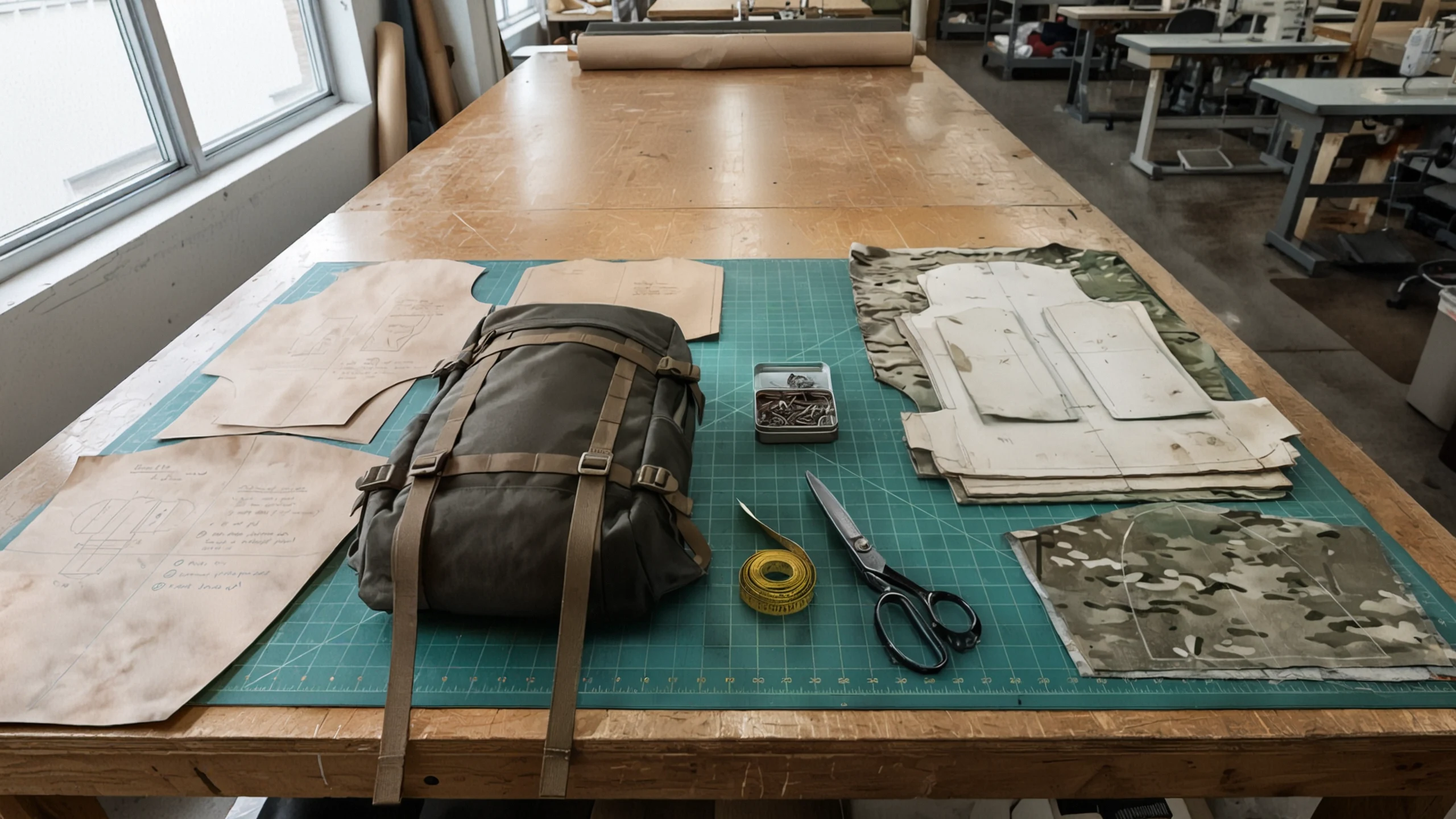
OEM means a factory builds the design you hand it. ODM means you are customizing a design the factory already owns. The two get thrown around like synonyms in sourcing forums, and mixing them up costs you weeks of quoting the wrong kind of shop.
Here is how to tell which one you want, from the side of the table that builds both.
What OEM means
OEM stands for original equipment manufacturer, though the term has drifted from its original meaning. In soft goods sourcing today, it means the factory manufactures a product to your specification. You bring the design, the tech pack, the materials list. The factory brings the sewing lines, the pattern cutters, and the labor to turn your document into units.
The factory owns none of the intellectual property on an OEM run. You do, assuming your contract says so in writing, which it should. What the factory owns is the equipment and the know-how to execute. That split is the whole appeal: you get a finished product without owning a single sewing machine, and you keep every right to the design.
What ODM means
ODM stands for original design manufacturer. Here the factory already has a design, a working pattern, maybe a whole catalog of them, and you are buying a version of it with your changes layered on. Swap the fabric, change the color, add your logo, adjust a strap length. The core pattern and the engineering behind it belong to the factory, not to you.
This is a faster and usually cheaper route to market. The development work is already done, the pattern is already proven, and sampling moves quickly because nobody is solving a construction problem from scratch. The tradeoff is that you do not own the design, and neither does anyone else who buys from the same catalog. If a competitor orders the same base pattern with a different logo, that is the model working as intended, not a breach of anything.
The question that separates them
Forget the acronyms for a second and ask one thing: who drew this first? If the answer is you, or a designer you paid directly, you are in OEM territory. If the answer is the factory, before you ever walked in, you are looking at ODM, however much it gets customized afterward.
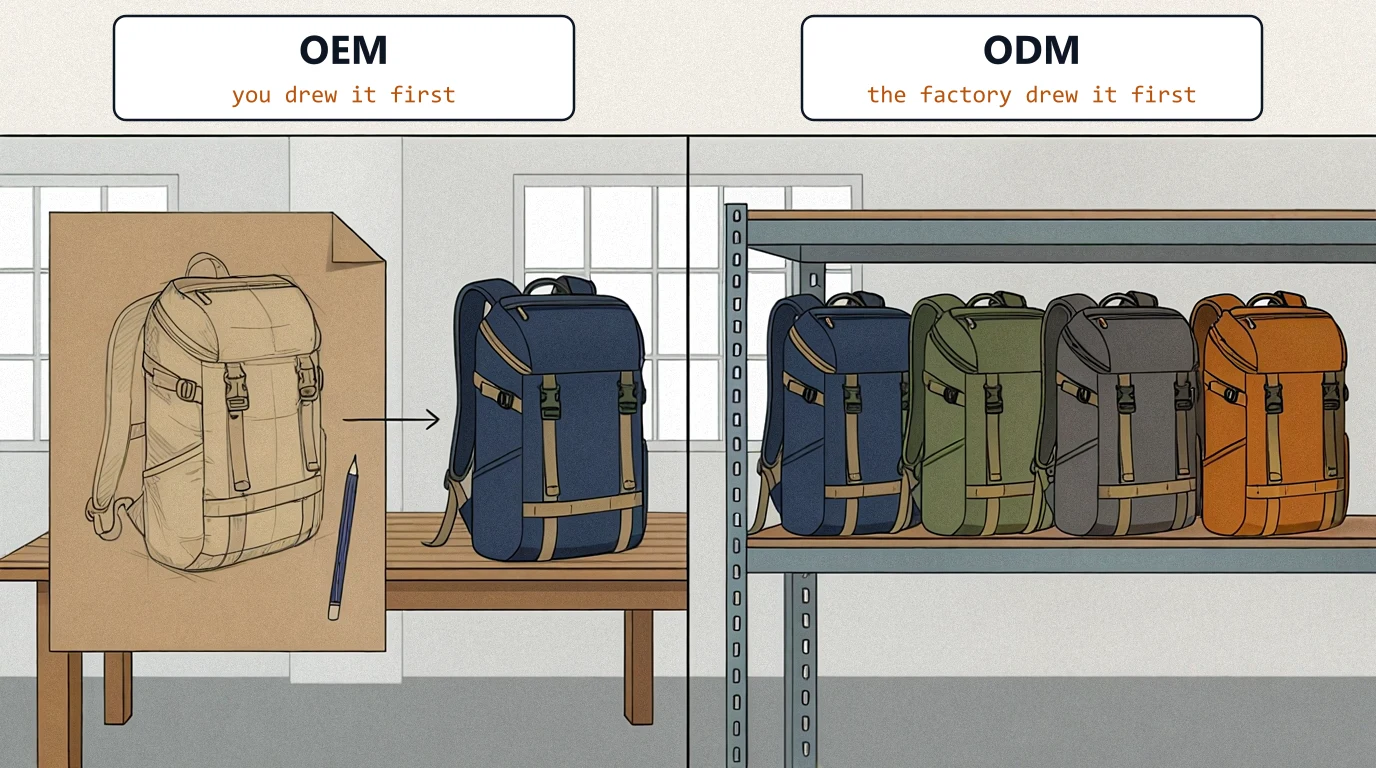
This matters most when you search for an oem bag manufacturer and get a mix of both kinds of shop in the results. Plenty of factories run both models side by side: an ODM catalog to fill capacity, and OEM capability for clients who bring their own tech pack. The factory will rarely volunteer which one your project is. You have to ask.
Questions that get you a straight answer
- Did your team design this, or did I? A straight answer to this one question resolves the whole label.
- Can I see the pattern file? On a true OEM run, the pattern is built from your spec and you are entitled to it. On ODM, the factory may treat the base pattern as proprietary, which is fair, but say so upfront.
- Who else is this design sold to? A straight ODM shop will tell you. A dodge here is a sign the model is not what you were told.
- Is this an odm backpack with my branding, or a backpack built to my construction notes? Say it in those exact words. Vague language is where the two models blur on purpose.
Private label is a third door, worth naming separately
A private label bag manufacturer sells you an existing, finished product with your logo on it and nothing else changed. No construction edits, no fabric swap, just your brand on their stock item. It is faster than ODM and far faster than OEM, and it is the right call when you want to test a market before investing in any development at all.
The failure mode is founders who think they bought private label and actually got ODM pricing, or the reverse: paying development rates for what was really a catalog pull. Ask directly whether the base product changes at all for your order. If the answer is no, you are buying private label, and the price should reflect that there was no design work on your behalf.
Which one should you buy
If your product is genuinely new, something nobody else is selling, you need OEM. There is no shortcut around development work for a design that does not exist yet, and an ODM shop will either say no or quietly force your idea into their existing pattern library, which is how a distinctive concept comes back looking like everyone else's.
I learned this on my own first product, before I ran a factory. If I could go back, I'd hire someone exactly like me. It would have saved years and thousands of dollars. Instead I learned product development, patent strategy, and enforcement the hard way, one expensive mistake at a time. An OEM project is where that kind of mistake gets made or avoided, because nobody else has solved your construction problems yet.
If your idea is a reasonable variation on something that already works well, ODM gets you to market faster and usually cheaper, and there is nothing wrong with that choice as long as you went in knowing the design is shared. And if you just need a branded product fast with no changes to the item itself, private label is the right answer, not a lesser version of the other two.
What to do this week
Write down, in one sentence, whether your product exists anywhere today in any form. That sentence tells you which door you are walking through. Then ask any factory you are quoting the straight question: did you design this, or did I? If your product is a bag, a pack, a vest, or technical soft goods and you want help sorting which model you actually need, tell me what you're trying to make.